

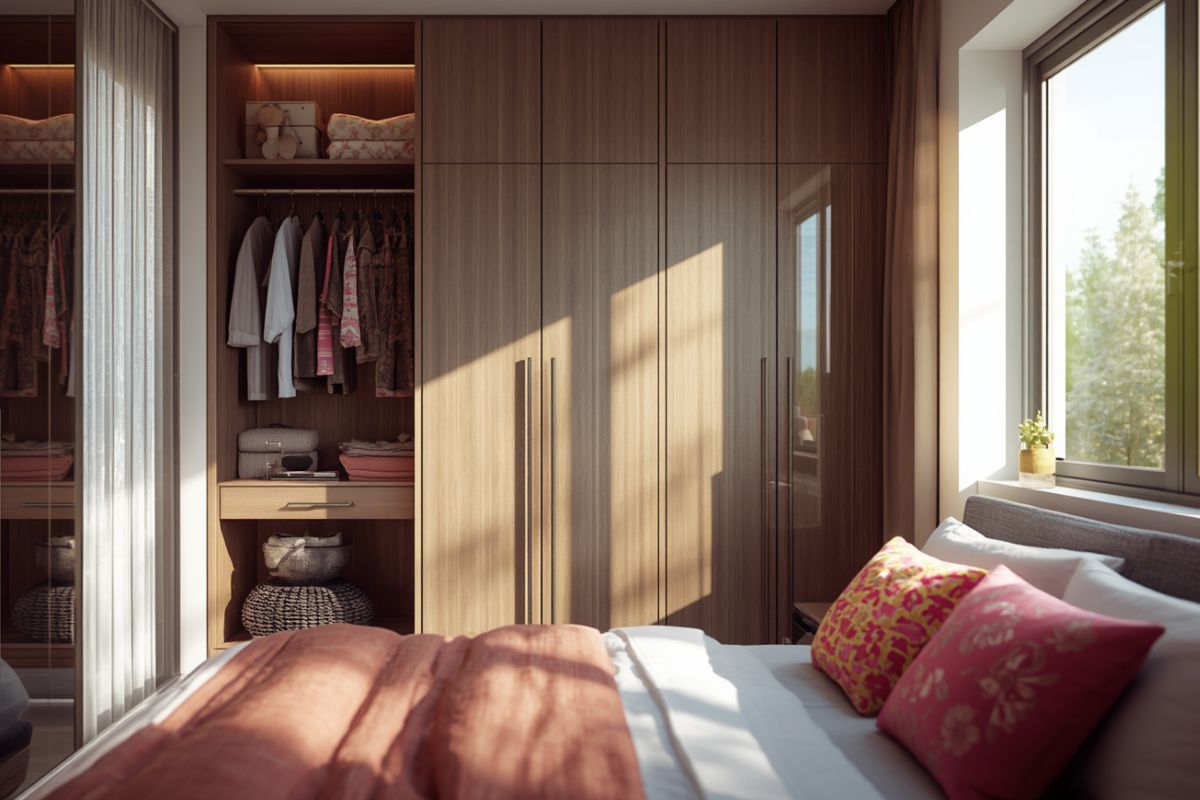
A wardrobe is one of those pieces of furniture that we generally choose because we need it rather than because we are excited about filling a large chunk of the bedroom with a massive cupboard. Unless you are lucky enough to have a separate dressing room, though, somewhere to hang clothes is pretty essential.
The problem is that wardrobes are big. Even a fairly standard wardrobe can suddenly look enormous when you get it into a smaller bedroom, particularly if you have bought it online and haven’t quite appreciated what those measurements will look like in real life. What seemed perfectly reasonable on the website can end up dominating the entire room and making everything else feel squeezed in around it.
Choosing the right wardrobe isn’t necessarily about finding the smallest one you can get away with, either. A tiny wardrobe that doesn’t hold everything you need will just result in clothes being stored elsewhere around the room, which isn’t going to make the space feel any bigger! Instead, it is about choosing something that gives you the storage you need while working with the proportions and style of the room.

Measure the room, not just the available gap
It sounds obvious that you should measure before buying a wardrobe, but it is easy to concentrate entirely on whether a wardrobe will physically fit into a particular space.
There is quite a difference between fits and looks right.
If you have a 160cm gap and buy a wardrobe that is 158cm wide, technically you have done your measuring perfectly. That doesn’t necessarily mean it will look good there, particularly if it is also very deep, reaches almost to the ceiling and is a dark colour.
Before choosing anything, look at the room as a whole and think about how much visual space the wardrobe will take up. It can even be worth marking the width and depth out on the floor with masking tape so you can see how far into the room it will come.
Don’t forget the height, either. Taller wardrobes can actually work brilliantly in smaller rooms because they make use of otherwise wasted vertical space, but there is a balance between using the height of the room and making it feel as though you have installed a huge box in the corner.
Think about depth as well as width
When we talk about wardrobes being too big for a bedroom, width tends to get most of the attention, but depth can make just as much difference.
A deep wardrobe protruding into the room can make the floor space feel considerably smaller, especially if it is close to the bed. You don’t want to have to shuffle sideways between the wardrobe and bed every morning simply because you wanted a few extra centimetres of storage.
If your bedroom is narrow, look at shallower wardrobe options and think carefully about what you actually need to store inside them. Hanging clothes obviously need a certain amount of depth, but clever internal layouts can sometimes give you plenty of usable storage without requiring an enormous piece of furniture.
This is also where measuring your existing furniture can help. If you already have a chest of drawers that feels like the right depth for the room, compare its measurements with the wardrobes you are considering. It gives you a much better idea of how they might feel in the space than trying to visualise a number on a product listing.
Sliding doors can make a huge difference
Traditional wardrobe doors need space in front of them to open, which isn’t always something you think about until you have put the bed in place and realise the wardrobe door hits it!
Sliding-door wardrobes can be a particularly good option for smaller bedrooms because you don’t need to allow that extra clearance. You can position other furniture closer to the wardrobe while still having easy access to your clothes.
They can also give a wardrobe a more streamlined appearance because there aren’t handles and doors projecting outwards into the room.
Of course, sliding doors aren’t automatically the best choice for everyone. With hinged doors you can open the entire wardrobe at once, whereas sliding doors will always cover part of the interior. Think about how you actually use your wardrobe rather than choosing purely on appearance.
Mirrored wardrobes can help a small bedroom feel bigger
Mirrors are one of the oldest tricks for making a room feel larger, but that doesn’t mean they don’t work.
A mirrored wardrobe reflects both light and the room itself, which can reduce that feeling of having a large solid piece of furniture taking up an entire wall. They can be particularly effective opposite or near a window, where they help bounce natural light around the room.
There is also the practical benefit of having a full-length mirror without needing to find another wall for one.
You don’t necessarily need completely mirrored doors, either. A wardrobe incorporating some mirrored panels can give you a similar effect if an entire wall of mirrors isn’t really your style.
Consider wardrobes that blend into the walls
Colour makes more of a difference than you might expect when you are choosing a large piece of furniture.
A dark wardrobe against a pale wall is going to stand out, which might be exactly what you want if it is a beautiful piece of furniture you want to make a feature of. If your priority is making the bedroom feel spacious, however, something closer to the colour of the walls will usually blend into the room much more easily.
White, cream, pale grey and light wood wardrobes can all work well in smaller spaces, depending on the rest of your décor. If you love darker furniture, you don’t have to avoid it completely, but think about whether a huge dark wardrobe will visually dominate the room before ordering it.
The finish matters too. Very ornate furniture can feel heavier than something with simple, clean lines, even when the actual dimensions are almost identical.
Don’t automatically assume freestanding is best
Freestanding wardrobes are convenient because you can move them around, take them with you when you move house and replace them fairly easily. However, fitted wardrobes can sometimes make a small or awkward bedroom feel less cluttered.
Rather than having gaps above and beside a freestanding wardrobe, fitted storage can use the whole available area. It can be designed around alcoves, sloping ceilings and other awkward spaces that might otherwise be wasted.
This doesn’t necessarily mean you need a complete wall of expensive bespoke wardrobes. There are plenty of modular systems that can create a more fitted appearance without being completely custom-made.
The important thing is to compare how much storage you are actually getting for the amount of room the wardrobe occupies. A well-designed wardrobe may allow you to remove another chest of drawers or storage unit from the bedroom altogether, leaving you with more space overall.
Look inside the wardrobe before falling in love with the outside
A wardrobe can look beautiful and still be absolutely useless for the clothes you own.
Before buying one, think about what is currently in your wardrobe. Do you own lots of dresses and need full-length hanging space? Are most of your clothes folded? Do you need shelves for jumpers, drawers for underwear or somewhere sensible for shoes?
There isn’t much point buying a huge wardrobe if half the interior doesn’t work for you.
Good internal storage can allow a relatively compact wardrobe to hold far more than you would expect. Extra shelves, drawers, double hanging rails and storage boxes can all make better use of the available space.
It is worth being realistic here, too. If you have a lot of clothes, buying a tiny wardrobe because it makes the bedroom look spacious probably isn’t going to work in the long term. You will just end up adding another piece of storage furniture later.
Use the full height of the room
If floor space is limited, going upwards often makes much more sense than going outwards.
A tall wardrobe can give you valuable storage at the top for things you don’t need every day. Suitcases, spare bedding, seasonal clothes and other occasional items can all live up there rather than taking up space elsewhere.
Using more of the wall height can also look surprisingly neat. A short wardrobe with boxes and bags piled on top often makes a room look much more cluttered than a taller wardrobe with everything hidden behind doors.
Just make sure you can actually reach what you put at the top. Keeping a small folding step somewhere nearby is much easier than climbing precariously on the bed every time you need your winter jumpers!
Think about where the wardrobe will sit
Sometimes it isn’t the wardrobe itself that makes a bedroom feel cramped but where it has been positioned.
If possible, avoid putting a very large wardrobe somewhere that blocks natural light from a window or is the first thing you see as you enter the room. Having a huge piece of furniture looming beside the doorway can immediately make the room feel smaller.
Look for alcoves and stretches of wall where the wardrobe can sit naturally. In some rooms, positioning it along the same wall as the door means it is largely out of sight when you first walk in, making the room feel more open.
Obviously, bedroom layouts don’t always give us endless options, particularly in smaller homes, but it is worth experimenting before deciding where everything will go.
Remember that fewer pieces of furniture can make a room feel bigger
It is easy to assume that several smaller pieces of furniture will make a bedroom look more spacious than one large wardrobe, but that isn’t always the case.
A wardrobe, chest of drawers, clothes rail and separate shelving unit can create lots of visual clutter and take up more floor space collectively than one well-designed wardrobe.
If a slightly larger wardrobe means you can get rid of another piece of furniture, it might actually be the better choice.
This is why I wouldn’t recommend choosing a wardrobe based on size alone. The aim isn’t to buy the smallest wardrobe possible; it is to create a bedroom that feels comfortable while still giving you enough practical storage.
Don’t forget about the rest of the bedroom
Your wardrobe doesn’t exist in isolation, so think about how it will work alongside everything else.
If you have a large bed, substantial bedside tables and a big chest of drawers, adding an equally chunky wardrobe might simply be too much furniture for the room. Something with cleaner lines or a lighter finish could balance things out.
Equally, if the rest of the bedroom is fairly minimal, you may have more freedom to choose a wardrobe that makes a statement.
Leaving some visible floor and wall space is usually what makes a bedroom feel less crowded. You don’t need to fill every available gap simply because another piece of furniture could fit there.
Choosing a wardrobe you’ll be happy with long term
A wardrobe is generally something you expect to keep for years, so it is worth spending a little more time choosing the right one rather than simply ordering the first design that fits the measurements.
Start with what you genuinely need to store, measure the room properly and then consider how the wardrobe will affect the space around it. Think about its depth and height as well as its width, whether sliding or hinged doors will work better and whether mirrors or a lighter finish could help it blend into the bedroom.
Most importantly, don’t assume that a small bedroom automatically needs a tiny wardrobe. Sometimes one larger, thoughtfully chosen wardrobe that stores everything properly will make a bedroom feel far calmer and more spacious than several smaller storage solutions dotted around the room.
After all, there isn’t much point having a beautifully spacious-looking bedroom if half your clothes are living on a chair in the corner!